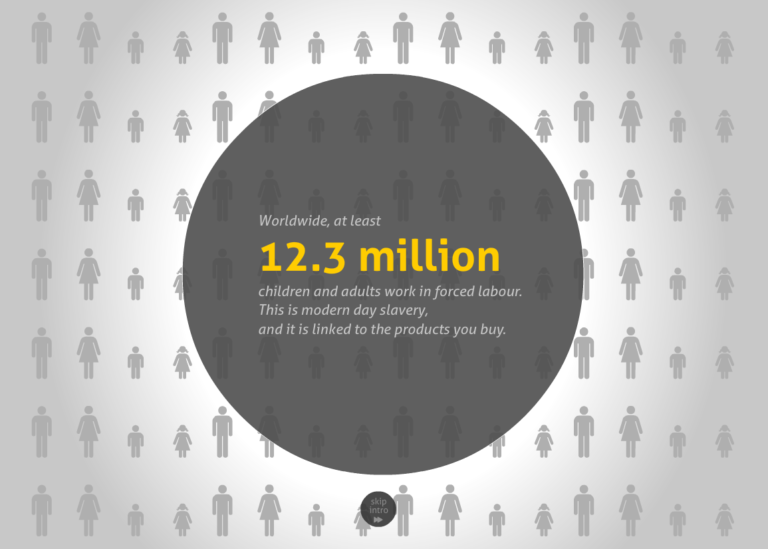
The nature of today’s globalised economy means that it is not immediately apparent how specific products on our shelves may link to slavery as products typically pass through a long chain of producers, manufacturers, distributors and retailers. It’s not just trainers and t-shirts – over 120 types of products in 58 countries are made using forced or child labour. Products of Slavery, a data visualisation project from Anti-Slavery International, shows this clearly.
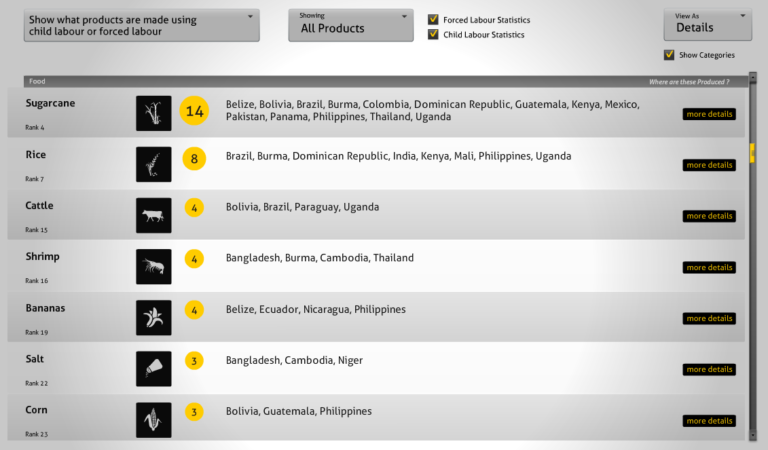
Products of Slavery is a data visualisation website about forced labour and child labour, also known as modern slavery, in the supply chain of many consumer goods. The site was launched by Anti-Slavery International to mark the UK’s first Anti-Slavery Day on Monday 18 October 2010.
Companies have a unique ability to address forced and child labour within their supply chains. Consumers also have a vital role to play in calling for companies’ action to end forced labour.
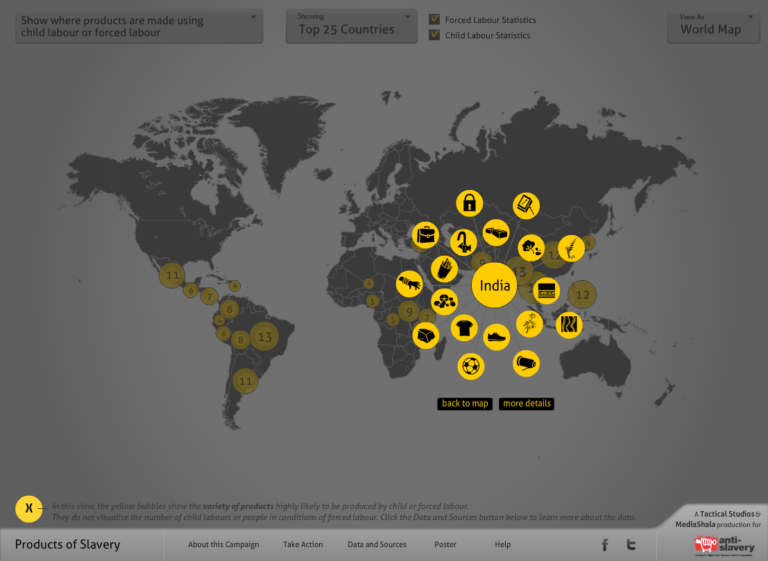
Visitors to the Products of Slavery website can explore maps, charts and other interactive displays about forced labour and child labour used to make 122 different products in 58 countries. The data visualisation reveals vital information about the origins of these products, whose journey to the supermarket shelves is usually so well concealed in today’s globalised economy.
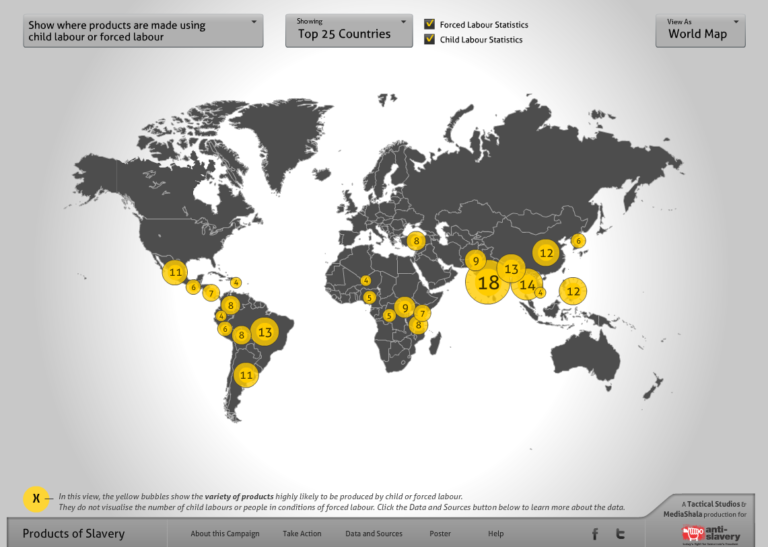
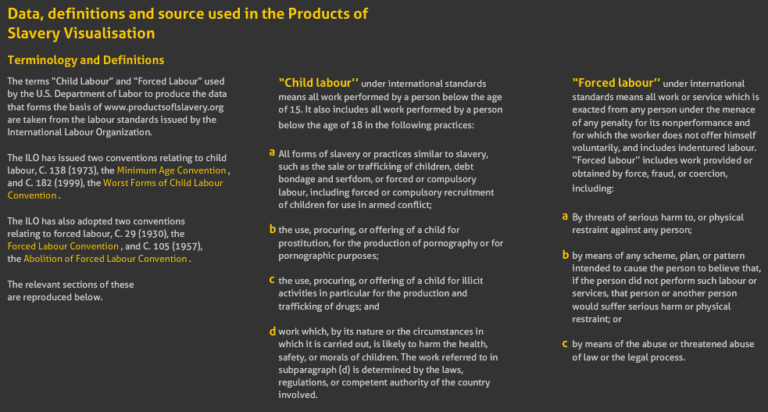
The primary source of data in this Products of Slavery visualisation comes from the U.S. Government, specifically a report produced by the Department of Labour’s Bureau of International Labour Affairs (ILAB) in 2009 called “List of Goods Produced by Child Labour or Forced Labour – Report Required by the Trafficking Victims Protection Reauthorization Acts of 2005 and 2008”.
Click here to go to the Products of Slavery website.



